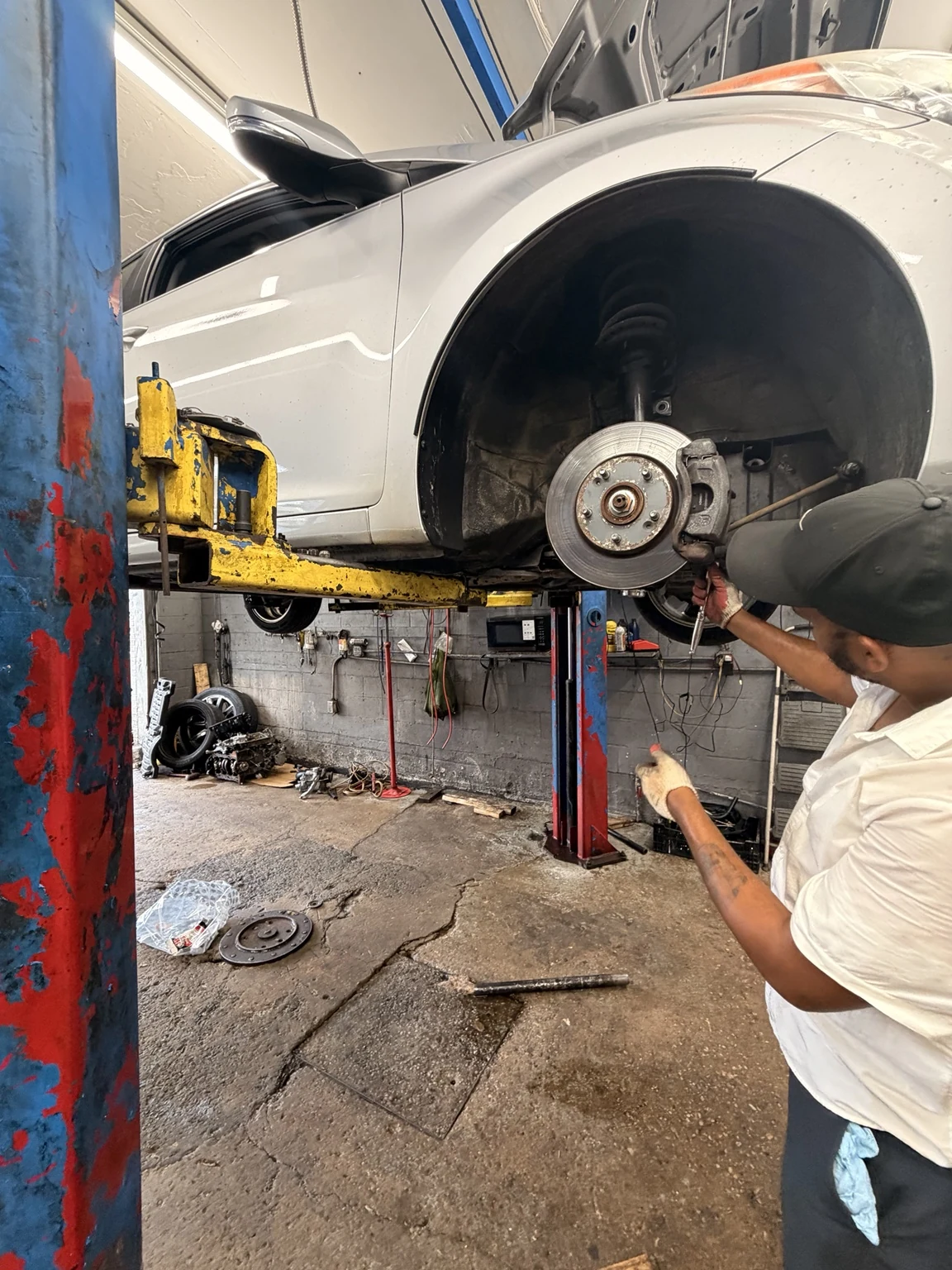
Tell us about squealing, grinding, vibration or a change in pedal feel. The shop evaluates the braking system and explains the recommended repair before work is approved.
Describe whether the concern appears while braking or all the time.
Mention pulling, grinding, vibration or warning lights.
If braking is weak or unreliable, stop driving and request roadside help.
BEFORE YOU APPROVE
Understand the brake estimate.
Tell us what changes when you brake. Findings from the vehicle determine whether the job involves pads, rotors, a caliper or another part of the braking system.
What affects the estimate
Front, rear or both axles
Rotor condition and measured wear
Caliper operation, leaks and related components
Ask which measurements or findings support the repair, what is included for each axle, and whether any additional brake work is recommended.
Book the visit first. When you bring the vehicle, complete signed customer check-in with your contact details, vehicle and concern. Use the customer portal for repair updates, or call the front desk for help.
Do not continue driving if braking is impaired or the pedal feels unsafe. Move to safety if possible and call for towing coordination.
Why does my car shake when I brake?+
Brake vibration can have several causes. Tell us whether it appears in the pedal, steering wheel or whole vehicle and at what speed; an inspection is needed before recommending parts.
Will I see the brake findings before repairs?+
Ask the advisor to review the measured wear or observed problem, the proposed parts and the written estimate. You decide whether to authorize the repair.
Service near you
Find practical visit information for your community and the M&A shop.
Brake Repair in Hyattsville: Understand the Noise, Pedal Feel, and Repair Estimate
A brake problem deserves a clear explanation before it becomes a parts list. Squealing, vibration, a warning light, and a soft pedal can involve different systems, even when drivers describe all of them as bad brakes. This guide explains the questions to ask, the evidence a useful inspection should provide, and the situations that call for stopping your trip. For M&A Auto Repair customers, the goal is a repair conversation you can follow: what changed, what was measured, what needs attention, and why.
Start with what you feel, hear, and see
Tell the advisor whether the concern happens during the first stop of the morning, after several stops, at highway speeds, or whenever you press the pedal. Note whether the steering wheel shakes, the pedal pulses, or the entire vehicle vibrates. A brief noise after rain may have a different explanation from a grinding sound that continues throughout a drive. Describing the conditions is more useful than deciding in advance which part failed.
If safe, record the sound while parked with someone else operating the recording device, or have a passenger document it during normal travel. Do not perform hard stops to recreate a symptom. Mention recent tire service, brake work, pothole impacts, and any change in braking distance.
When the vehicle should stay parked
A pedal that drops toward the floor, a sudden loss of braking ability, visible brake fluid leakage, or severe pulling during braking needs urgent attention. Pull over safely and arrange transportation or towing rather than testing whether another trip is possible. A burning smell with smoke near a wheel also deserves immediate attention; do not touch the wheel or brake assembly.
Warning lights need context. A red brake warning can involve the parking brake or a hydraulic concern. An amber ABS warning can indicate a fault in anti-lock control. Neither color alone proves the cause or establishes that the vehicle is safe to drive. Follow your owner's manual and describe all accompanying symptoms when requesting help.
What a useful brake inspection measures
An inspection should consider more than the most visible outer pad. Ask about inner and outer pad thickness, rotor condition and thickness, caliper movement, flexible hoses, visible lines, and hardware. Uneven pad wear can point to a sticking component. A worn rotor must be evaluated against the specification for that exact part and vehicle; a universal thickness number is not reliable.
For vibration, measurements may include rotor thickness variation or runout when appropriate. Wheel mounting surfaces, wheel fastener procedures, and suspension condition can also matter. Bosch's brake service guidance describes checks across pads, discs, calipers, and fluid. That system-wide approach helps explain why the cheapest pad-only quote may not address the actual complaint.
Why noise does not automatically identify the repair
Squeal can come from a wear indicator, friction characteristics, vibration between components, or installation-related issues. Grinding can signal serious wear, but a noise description still needs an inspection. A vehicle pulling to one side may have a brake concern, a tire problem, or another mechanical issue. Simply buying the component most often mentioned online can leave the underlying fault untouched.
Ask the shop to connect each recommendation to a finding. Useful explanations include measured wear, a component that does not move correctly, leakage, or an identified fault in a control system. A photo provides context, while measurements and test results explain whether the condition is acceptable. Both are stronger than a general statement that everything looks old.
How parts wear and what helps them last
Brake pads convert motion into heat through friction, so their life depends on use rather than one dependable mileage figure. Stop-and-go trips, repeated steep descents, vehicle load, and driving habits influence wear. Corrosion and lack of movement can also affect a lightly driven car. Two vehicles with identical mileage can therefore need different work.
Leave room to slow smoothly, avoid unnecessary repeated hard braking, and respect the vehicle's load limits. Have unusual wear patterns investigated instead of replacing pads repeatedly. Maintain brake fluid according to the vehicle manufacturer's requirements. Many common brake fluids absorb moisture over time, but the correct fluid specification and service procedure are vehicle-specific.
What belongs on the estimate
A clear estimate identifies the axle being serviced, the parts proposed, and the reason each item is included. Ask whether the work includes pads, rotors or resurfacing where permitted, hardware, caliper service, fluid work, and applicable electronic parking brake procedures. Ask which items address the current symptom and which are recommended maintenance.
Compare the scope before comparing totals. One quote may include rotors and another may assume they can be reused. Ask how the shop will handle a rotor or seized component that cannot be fully assessed until disassembly. Agree on an authorization limit and a contact method before additional work begins. Also ask about the applicable parts and labor coverage in writing.
Bring the history that helps diagnosis
Bring previous brake invoices if available, including dates, mileage, and the axle repaired. Mention whether a warning appeared immediately after another service or only under certain weather conditions. If a different shop supplied measurements, share them without assuming they still describe the current condition. Wear and symptoms can change.
Tell the advisor how you use the vehicle: commuting, delivery, rideshare, towing within the vehicle's rating, or extended periods parked. These details help frame the concern and future maintenance. If you need the car for work, discuss diagnostic timing and transportation before approving repairs. An inspection appointment does not automatically guarantee a same-day completed repair.
What to expect after the repair
Ask what the final verification covered and whether the original symptom was reproduced before and after service. The appropriate check may include pedal feel, leakage inspection, warning light status, and a controlled road test when safe. Any required bedding or break-in directions should match the installed components rather than a generic internet routine.
Keep the final invoice with the mileage and work performed. Return promptly if the pedal changes, braking feels unstable, or a warning appears. Do not assume that every new noise is harmless bedding. A follow-up conversation should begin with the conditions when it occurs and the actual repair record.
Questions drivers ask
Do brakes always need pads and rotors together?
No single rule fits every vehicle and condition. Rotor measurements, surface condition, manufacturer instructions, and the complaint determine whether reuse, permitted resurfacing, or replacement is appropriate. Ask for the supporting measurement and minimum specification.
Can I replace only one worn pad?
Brake service is normally planned in matched sets across an axle for consistent operation. An unusually worn pad also requires an explanation; replacing that pad alone can hide a sticking caliper or another unresolved cause.
Does an ABS light mean the pads are worn?
Not necessarily. ABS uses wheel-speed information and electronic or hydraulic controls. A fault may involve a sensor, wiring, a bearing-related signal issue, or other components. Reading the correct module and testing the circuit are different from measuring pad wear.
Will a photo tell me whether my brakes are safe?
A photo can show a damaged component or visible wear, but it cannot establish braking performance by itself. Ask for measurements, inspection findings, and the technician's explanation alongside any image.