Clunks, pulling, uneven tire wear, or a rough ride
Shocks, struts, control arms, ball joints, and steering components
Review the estimate and authorize the work before repairs begin.
Your visit, connected
Book the visit first. When you bring the vehicle, complete signed customer check-in with your contact details, vehicle and concern. Use the customer portal for repair updates, or call the front desk for help.
Several steering or suspension parts can make a noise. Note whether it happens while turning, braking or going over bumps so the team can inspect the relevant components.
Can uneven tire wear be related to suspension?+
Yes, but wear can have several causes. An inspection of tires, steering and suspension helps determine whether a repair or alignment is needed.
Service near you
Find practical visit information for your community and the M&A shop.
Steering and Suspension Repair in Hyattsville: Clunks, Pulling, Vibration, and Uneven Tires
A vehicle that wanders, clunks over bumps, vibrates, or wears tires unevenly needs an inspection that considers tires, steering, and suspension together. An alignment cannot repair a loose joint, and new struts will not solve every vibration. This guide helps M&A Auto Repair customers describe handling changes, understand useful inspection evidence, and plan repairs in an order that addresses the cause before paying for repeated adjustments.
Describe when the vehicle behaves differently
Tell the advisor whether the concern happens while braking, turning, accelerating, crossing bumps, or traveling at a particular speed. A single clunk during a parking maneuver differs from a repeated vibration at highway speed. Note whether the steering wheel is off center, whether the vehicle pulls consistently, and whether the behavior began after an impact or tire service.
Describe the vehicle's load and tire setup too. Aftermarket wheels, recent tire replacement, uneven cargo, or a change in tire pressure can influence the complaint. Do not test the vehicle by releasing the steering wheel or making abrupt maneuvers. Your observations during normal driving are enough to begin the conversation.
Handling changes that need immediate attention
Sudden difficulty steering, substantial looseness, a wheel that appears displaced, a tire rubbing severely, or unstable handling calls for stopping safely and arranging help. Continuing to drive with a suspected damaged steering or suspension component can worsen the condition and compromise control.
A dashboard steering warning should be evaluated using the vehicle's instructions and accompanying symptoms. Some systems are electrically assisted and do not use the traditional hydraulic-fluid setup. A warning does not automatically mean a fluid top-up is the answer. Explain whether assistance changed, whether the warning is constant, and what happened immediately before it appeared.
Begin with tires and visible condition
Tire pressure, tread condition, tire damage, and wheel condition provide important context for a steering complaint. A tire-related pull or vibration can resemble a suspension problem. The correct inflation target comes from the vehicle's specified guidance, commonly its placard, rather than the maximum pressure printed on a tire sidewall.
Ask for a clear description of any unusual wear pattern and whether the underlying cause has been identified. Replacing a badly worn tire may be necessary, but it does not automatically correct the reason it wore that way. Monroe's guidance emphasizes examining the related suspension condition rather than addressing only the tire symptom.
What the steering and suspension inspection should explain
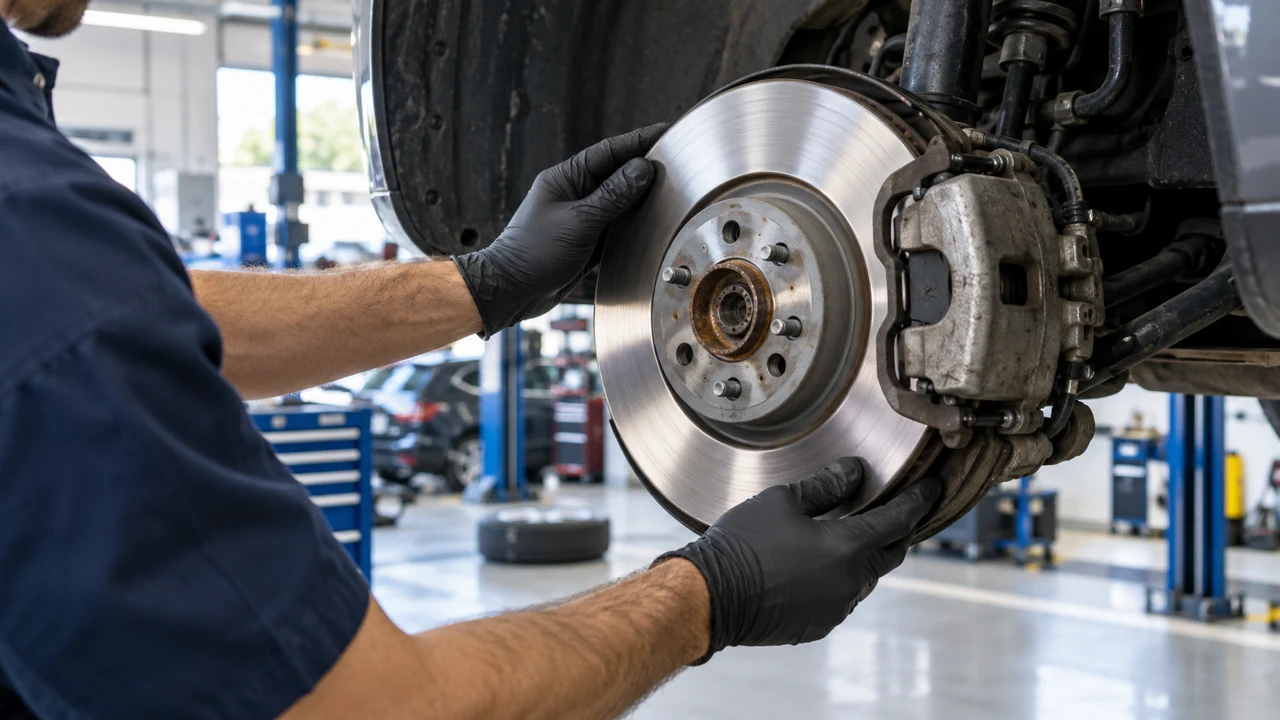
Depending on the vehicle, the inspection may include joints, bushings, tie rods, control arms, mounts, springs, wheel bearings, shocks, and struts. The technician needs the appropriate loading and inspection procedure for the design. A component can look acceptable from one angle and still have movement or damage that requires a specific check.
Ask which component has unacceptable movement, visible damage, or another confirmed fault. Photos and video can show context, but the explanation should connect the finding to the complaint or safety concern. A statement that the suspension is old is not as helpful as identifying the part, the condition, and the applicable assessment.
Separate alignment, balance, and component repair
Alignment concerns the position and angles of the wheels relative to the vehicle. Balancing addresses the distribution of rotating mass in a wheel-and-tire assembly. Repairing a loose or damaged component addresses the hardware. These services solve different problems and should not be treated as interchangeable.
Before approving an alignment for a recurring pull or wear concern, ask whether tires and suspension condition were evaluated. If a component cannot hold its intended position, an adjustment may not last. Likewise, a highway vibration may need tire or wheel evaluation rather than an alignment alone. The symptom and findings should determine the sequence.
Understand what shocks, struts, and springs do
Springs support vehicle load, while dampers control suspension movement. A strut can also form part of the wheel-locating structure, depending on the design. Excessive bouncing, reduced control, leakage, and unusual wear may justify further evaluation, but no single symptom proves that every damper needs replacement.
Monroe distinguishes slight surface weepage from more substantial leakage in its technical guidance. Ask how the observed condition was classified and whether other performance or physical findings support replacement. When work changes steering or suspension geometry, discuss the required alignment check; Monroe recommends alignment after strut or related component replacement.
Why components wear and how to reduce avoidable damage
Repeated movement, environmental exposure, contamination, load, and impacts all affect suspension components. Rubber bushings can deteriorate, joints can develop play, and a hard pothole or curb strike can damage parts or change geometry. Mileage gives context but cannot replace inspection of the actual vehicle.
Keep tires properly inflated, respect vehicle load limits, and have impact-related changes checked promptly. Addressing a torn protective boot or a developing noise early may improve the repair decision, though it does not guarantee that a component can be saved. Avoid repeatedly replacing tires or requesting alignments without investigating a persistent pattern.
Compare estimates by component and required follow-up
Ask which parts are being replaced, why, and whether the estimate includes related hardware, alignment, or any required calibration or initialization for that vehicle. A complete strut assembly and a strut-only repair can involve different reused components. Comparing the part names and included work is more useful than comparing totals alone.
Ask whether paired replacement is recommended and what vehicle or component guidance supports it. Clarify how seized fasteners or additional damage will be handled if discovered during disassembly. Request authorization before expanded work, and ask for the applicable parts and labor coverage. Major handling changes deserve a final verification that matches the original complaint.
Bring the history and review the completed work
Bring recent tire, alignment, and suspension invoices, especially any before-and-after alignment printouts. Tell the advisor about wheel changes, prior collisions, pothole impacts, and modifications. Explain if the symptom disappears after a tire rotation or changes with load, because that pattern can guide the investigation.
After service, ask what was verified, whether the steering wheel position and handling were checked, and whether any tire damage still needs attention. Keep alignment results with the invoice when an alignment was performed. If the original behavior remains, describe it promptly instead of assuming that new components need time to stop clunking or pulling.
Questions drivers ask
Will an alignment fix a clunk?
An alignment adjusts wheel geometry; it does not repair a loose joint, damaged mount, or other failed component. A clunk should be inspected so the cause can be addressed before deciding which adjustments are needed.
Do shocks have one fixed replacement mileage?
Service life depends on vehicle design, road conditions, load, and component condition. A mileage recommendation can prompt an inspection, but an explanation of the actual findings is more useful than mileage alone.
Why is my steering wheel shaking only when braking?
That timing can point the investigation toward braking-related forces, but tires, wheels, and suspension condition may contribute. Ask for measurements and inspection findings rather than assuming a single component is responsible.
Should I replace tires before repairing the suspension?
Unsafe tires need prompt attention. When suspension faults are also present, coordinate the work so the underlying cause is corrected and any necessary alignment is completed. The exact order depends on the findings and vehicle condition.